
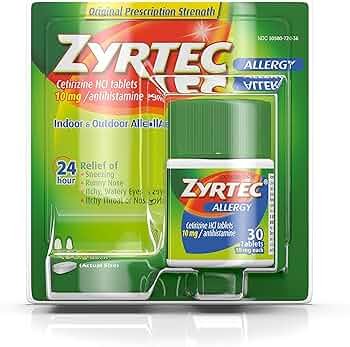
Zyrtec Allergy Relief Tablets are a clinically proven, over-the-counter (OTC) antihistamine formulated for adults and children aged 6 years and above. Each pack contains 21 tablets, providing a convenient three-week supply of once-daily allergy relief. The active ingredient, cetirizine hydrochloride, is a second-generation antihistamine widely regarded for its effectiveness and relatively low sedating profile compared to older, first-generation antihistamines.
Zyrtec works for a full 24 hours with a single daily dose, making it one of the most practical and consistent options for managing persistent or seasonal allergy symptoms. If you are looking to buy Zyrtec Allergy Relief Tablets in Kenya, this product is a trusted pharmacy staple and one of the leading choices for allergy treatment in Kenya, available at registered pharmacies nationwide.
Key Benefits
- Provides fast, effective relief from a wide range of allergy symptoms
- Once-daily dosing delivers full 24-hour symptom control
- Second-generation antihistamine — less sedating than older antihistamines at recommended doses
- Effective for both seasonal allergies (hay fever) and year-round (perennial) allergic conditions
- Relieves sneezing, runny nose, itchy and watery eyes, nasal congestion, and skin itching
- Suitable for adults and children aged 6 years and above
- 21-tablet pack provides a complete three-week course — ideal for sustained allergy management
- Well-established safety and efficacy profile with decades of clinical use worldwide
- OTC — no prescription required at standard doses
What It Is & How It Works
Active Ingredient
Each film-coated tablet contains:
| Active Ingredient | Strength | Role |
|---|---|---|
| Cetirizine Hydrochloride | 10 mg | Second-generation H1 antihistamine — blocks histamine receptors to relieve allergy symptoms |
How It Works
When the body is exposed to an allergen — such as pollen, dust mites, pet dander, or mould spores — it releases histamine, a chemical mediator that binds to H1 receptors throughout the body and triggers the characteristic symptoms of an allergic reaction including sneezing, itching, runny nose, and watery eyes.
Cetirizine hydrochloride is a potent, selective H1 receptor antagonist that competitively blocks histamine from binding to these receptors. By occupying the H1 receptors before histamine can attach, cetirizine effectively prevents and relieves the cascade of allergy symptoms. Unlike first-generation antihistamines, cetirizine has limited penetration of the blood-brain barrier, which significantly reduces — though does not entirely eliminate — the risk of sedation at standard doses.
Classification
This product is classified as an Over-the-Counter (OTC) medicine. It can be purchased without a prescription in Kenya at the standard 10 mg adult dose. Consult a pharmacist or doctor if you are unsure whether this product is suitable for you or your child.
Formulation
Film-coated tablets. Each pack contains 21 tablets. Tablets should be swallowed whole with water. They may be taken with or without food.
Uses & Indications
Zyrtec Allergy Relief Tablets may be used for the symptomatic relief of:
- Seasonal allergic rhinitis (hay fever) — sneezing, runny nose, nasal congestion, and itchy, watery eyes triggered by pollen, grass, and trees
- Perennial allergic rhinitis — year-round allergy symptoms triggered by dust mites, pet dander, mould, and cockroach allergens
- Allergic conjunctivitis — itchy, red, and watery eyes caused by allergens
- Chronic idiopathic urticaria (hives) — itchy, raised skin welts without an identified cause
- Allergic skin conditions — itching, rash, and skin irritation associated with allergic reactions
- Insect bite reactions — relief of itching and localised swelling associated with mild allergic responses to insect bites
IMPORTANT: Zyrtec is indicated for the relief of allergy symptoms. It is NOT intended for the treatment of severe allergic reactions (anaphylaxis), asthma attacks, or acute angioedema — these are medical emergencies requiring immediate medical attention and adrenaline (epinephrine) administration.
Dosage & Administration
NOTE: Use only as directed on the label or by a pharmacist. Do not exceed the recommended dose or duration of use.
| Age Group | Dose | Frequency |
|---|---|---|
| Adults and children 12+ years | 10 mg (1 tablet) | Once daily |
| Children 6–11 years | 5 mg (half a tablet) | Once daily — consult pharmacist |
| Children under 6 years | Not recommended without medical advice | — |
| Patients with kidney impairment | Dose adjustment required | Consult a doctor |
Administration Instructions
- Swallow the tablet whole with a full glass of water
- May be taken with or without food — taking with food may help if stomach upset occurs
- Take at the same time each day to maintain consistent 24-hour coverage
- If drowsiness occurs, consider taking the dose in the evening before bed
- Do not crush, chew, or split the tablet unless advised by a pharmacist — except when a half-tablet dose is required for children aged 6–11 years
- Do not take more than one full tablet (10 mg) in any 24-hour period
- For seasonal allergies, begin use before the allergy season starts for best results
- If using for chronic conditions, consult a healthcare provider regarding long-term use beyond 6 weeks
Possible Side Effects
Like all medicines, Zyrtec Allergy Relief Tablets may cause side effects in some people. These are generally mild and uncommon at recommended doses. Stop use and consult your pharmacist or doctor if you experience any of the following:
Common
- Drowsiness or sedation — particularly at higher doses or in sensitive individuals; cetirizine is less sedating than first-generation antihistamines but is not entirely non-sedating
- Dry mouth
- Headache
- Fatigue or tiredness
- Dizziness
Less Common
- Nausea or stomach discomfort
- Sore throat or pharyngitis
- Urinary retention — particularly in older males with prostate issues
- Blurred vision
WARNING: Rare but serious — seek immediate medical attention if you experience: severe allergic reactions to cetirizine itself (rash, swelling of the face, lips, tongue, or throat, difficulty breathing), severe skin reactions, seizures, or signs of liver dysfunction (yellowing of the skin or eyes, dark urine, persistent abdominal pain).
This is not a complete list of side effects. Consult a pharmacist or doctor for full information.
Warnings & Precautions
CONTRAINDICATION: Do NOT use if you are allergic to cetirizine hydrochloride, hydroxyzine, or any other ingredient in this product.
Do Not Use If You:
- Are under 6 years of age without specific medical advice
- Have end-stage renal disease (requiring dialysis) or severe kidney impairment without medical guidance
- Have a known hypersensitivity to piperazine derivatives
Use With Caution If You Have:
- Kidney disease or renal impairment — cetirizine is primarily excreted by the kidneys; dose reduction may be required; consult a doctor before use
- Liver disease — although cetirizine is primarily renally excreted, caution is still advised in severe hepatic impairment
- Epilepsy or a history of seizures — antihistamines may lower the seizure threshold in susceptible individuals
- Urinary retention or an enlarged prostate — antihistamines may worsen urinary retention
- Glaucoma — consult a doctor before use
Do Not Combine With:
- Alcohol — significantly enhances the sedative effect of cetirizine; avoid alcohol during use
- Sedatives, tranquilisers, sleeping tablets, or anxiolytics — additive central nervous system depression
- Other antihistamines — duplicated effect and increased side effect risk
- Theophylline (at high doses) — may reduce the clearance of cetirizine slightly; monitor closely
CLINICAL NOTE (Kenya-specific): Allergic rhinitis, urticaria, and insect bite reactions are among the most common allergy-related presentations in Kenyan pharmacies and clinics. Dust mites, cockroach allergens, and outdoor mould are significant year-round triggers in many parts of Kenya, particularly in urban areas such as Nairobi. Cetirizine is well-suited for perennial allergic rhinitis management in this context. Additionally, individuals working outdoors or in agricultural settings in Kenya — where exposure to pollen, dust, and insect stings is high — may benefit from consistent daily use throughout periods of heavy exposure. Drowsiness, even if mild, is a safety concern for those operating machinery, driving, or working at heights — caution is advised.
Keep out of reach of children. In case of accidental overdose, contact a poison control centre or emergency services immediately.
Storage Instructions
- Store below 25°C in a cool, dry place
- Protect from direct sunlight and excessive heat
- Keep away from moisture and humidity
- Keep the container tightly closed after each use
- Store out of reach and sight of children
- Do not use after the expiry date printed on the packaging
- Do not transfer tablets to another container
- Dispose of unused or expired tablets safely at your local registered pharmacy
Mandatory Disclaimer
Always read the label and use as directed. Do not exceed the stated dose. If your allergy symptoms persist beyond 6 weeks, worsen significantly, or are accompanied by fever, difficulty breathing, facial swelling, or signs of anaphylaxis, stop use and seek immediate medical attention. Frequent or severe allergic reactions may indicate an underlying condition requiring formal allergy assessment and management. This product information is provided for general guidance only and does not replace professional medical or pharmaceutical advice.
References
- Electronic Medicines Compendium (EMC) — Zyrtec / Cetirizine Hydrochloride 10 mg Summary of Product Characteristics
- World Allergy Organization (WAO) — Allergic Rhinitis and Antihistamine Treatment Guidelines
Reviews
There are no reviews yet.