
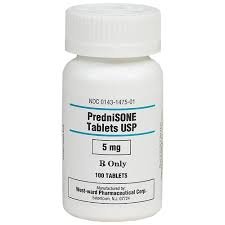
PRESCRIPTION NOTICE: Prednisone 5 mg is a Prescription Only Medicine (POM). It cannot legally be dispensed without a valid prescription from a licensed healthcare provider in Kenya. Do not use this medicine without medical supervision. Do not share this medicine with others even if they appear to have the same condition.
Prednisone Tablets 5 mg are a prescription-only oral corticosteroid used in the management of a broad spectrum of inflammatory, allergic, immune-mediated, and endocrine conditions. Each pack contains 20 tablets of prednisone 5 mg — a synthetic glucocorticoid that is one of the most widely prescribed and clinically versatile corticosteroids in global and Kenyan medical practice.
Prednisone is a prodrug that is rapidly converted in the liver to its pharmacologically active form, prednisolone, which exerts potent anti-inflammatory, immunosuppressive, and antiallergic effects across multiple organ systems. Its clinical utility spans an exceptionally wide range of conditions — from acute severe asthma and anaphylaxis to chronic autoimmune diseases and organ transplant rejection prevention. If you have been prescribed Prednisone 5 mg for inflammation or immune-mediated condition treatment in Kenya, this medicine must be taken strictly as directed by your healthcare provider. The price of Prednisone 5 mg in Kenya varies by pharmacy and is dispensed only on presentation of a valid prescription.
Key Benefits
- Potent, broad-spectrum anti-inflammatory and immunosuppressive activity across multiple organ systems
- Rapidly controls acute inflammatory conditions — including severe asthma, acute allergic reactions, and inflammatory flares
- Effective for a wide range of chronic conditions requiring long-term immune modulation
- Oral formulation — convenient, well-absorbed, and effective for systemic conditions where topical or inhaled therapy is insufficient
- Flexible dosing — available in a range of doses allowing precise titration from low maintenance doses to high-dose pulse therapy as directed by a physician
- Well-established safety and efficacy profile with decades of global clinical use across virtually all medical specialities
- Included on the Kenya Essential Medicines List (KEML) — recognised as an essential medicine for the Kenyan healthcare system
- Active metabolite prednisolone is directly active — conversion occurs reliably in patients with normal liver function
What It Is & How It Works
Active Ingredient
Each tablet contains:
| Active Ingredient | Strength | Role |
|---|---|---|
| Prednisone | 5 mg | Synthetic glucocorticoid prodrug — converted to prednisolone in the liver; exerts potent anti-inflammatory and immunosuppressive effects |
How It Works
Prednisone is pharmacologically inactive until it undergoes first-pass hepatic conversion to its active metabolite prednisolone by the enzyme 11-beta-hydroxysteroid dehydrogenase type 1 (11β-HSD1) in the liver. Prednisolone then exerts its therapeutic effects through the following mechanisms:
Genomic Mechanism (Primary)
Prednisolone binds to intracellular glucocorticoid receptors (GRs) in the cytoplasm of target cells. The prednisolone-GR complex translocates to the cell nucleus where it:
- Transactivation — binds to glucocorticoid response elements (GREs) on DNA, upregulating the transcription of anti-inflammatory proteins including lipocortin-1 (annexin A1), which inhibits phospholipase A2 and blocks the release of arachidonic acid — the precursor of all prostaglandins, leukotrienes, and thromboxanes
- Transrepression — interacts with and inhibits pro-inflammatory transcription factors including nuclear factor kappa-B (NF-kB) and activator protein-1 (AP-1), suppressing the production of pro-inflammatory cytokines (IL-1, IL-2, IL-6, TNF-alpha, interferon-gamma) and inflammatory mediators
Non-Genomic Mechanism (Secondary)
At higher doses, prednisolone produces rapid non-genomic effects through direct interactions with cell membranes and cytoplasmic signalling pathways, contributing to its rapid anti-inflammatory and immunosuppressive activity in acute settings.
Key Pharmacological Effects
- Anti-inflammatory — suppresses all phases of the inflammatory response including vascular permeability, leucocyte migration, phagocytosis, and fibroblast activity
- Immunosuppressive — reduces lymphocyte proliferation and function, inhibits antibody production, and suppresses cell-mediated and humoral immune responses
- Antiallergic — suppresses mast cell degranulation and the release of histamine and other allergic mediators
- Antifibrotic — inhibits fibroblast proliferation and collagen deposition
- Metabolic effects — increases blood glucose (gluconeogenesis), promotes protein catabolism, redistributes body fat, and promotes sodium and water retention — effects that are clinically significant in long-term use
Classification
Prednisone 5 mg is classified as a Prescription Only Medicine (POM) in Kenya. It must only be initiated, monitored, and adjusted by a licensed healthcare provider. A valid prescription is required for dispensing at any registered pharmacy in Kenya.
Formulation
Uncoated or film-coated tablets. Each pack contains 20 tablets. Tablets should be swallowed whole with water and taken with food or milk to reduce the risk of gastric irritation.
Uses & Indications
Prednisone 5 mg Tablets are indicated for the management of a broad range of conditions across multiple medical specialities, including:
Respiratory Conditions
- Severe acute asthma and status asthmaticus — short-course oral corticosteroids are a cornerstone of acute asthma management
- Acute exacerbations of chronic obstructive pulmonary disease (COPD)
- Eosinophilic pneumonia and hypersensitivity pneumonitis
- Sarcoidosis with pulmonary involvement
Allergic & Dermatological Conditions
- Severe allergic reactions and anaphylaxis — as adjunctive therapy following adrenaline
- Severe urticaria and angioedema not responding to antihistamines
- Severe eczema (atopic dermatitis) and contact dermatitis
- Pemphigus vulgaris and bullous pemphigoid — serious blistering skin conditions
- Stevens-Johnson Syndrome — under specialist supervision
Rheumatological & Musculoskeletal Conditions
- Rheumatoid arthritis — as bridging therapy during disease-modifying drug initiation
- Systemic lupus erythematosus (SLE) and lupus nephritis
- Polymyalgia rheumatica and giant cell arteritis
- Dermatomyositis and polymyositis
- Vasculitis syndromes
- Acute gout flares not responding to first-line therapy
Gastrointestinal Conditions
- Inflammatory bowel disease — Crohn’s disease and ulcerative colitis during acute flares
- Autoimmune hepatitis
Haematological Conditions
- Immune thrombocytopenic purpura (ITP)
- Autoimmune haemolytic anaemia
- Lymphoma and leukaemia — as part of chemotherapy protocols under oncologist supervision
Neurological Conditions
- Multiple sclerosis acute relapses
- Cerebral oedema associated with brain tumours or meningitis — under specialist supervision
- Myasthenia gravis
Endocrine Conditions
- Adrenal insufficiency (Addison’s disease) — as replacement therapy
- Congenital adrenal hyperplasia
Renal Conditions
- Nephrotic syndrome — particularly in children and for minimal change disease
- Lupus nephritis — under nephrology supervision
Transplantation
- Organ transplant rejection prevention and treatment — as part of an immunosuppressive regimen under transplant specialist supervision
IMPORTANT: The broad range of indications for prednisone reflects its potent systemic effects. The decision to initiate, adjust, or discontinue prednisone therapy must always be made by a licensed healthcare provider based on a thorough assessment of the indication, the appropriate dose, the planned duration, and the patient’s individual risk factors for corticosteroid-related adverse effects. Prednisone must never be self-prescribed or used without medical supervision.
Dosage & Administration
This medicine requires a valid prescription. Use only as prescribed by your healthcare provider. The following dosage information is provided for general reference only and does not constitute prescribing advice.
| Clinical Context | Typical Dose Range | Notes |
|---|---|---|
| Low-dose maintenance therapy | As directed | As directed |
| Standard anti-inflammatory dose | As directed | As directed |
| High-dose therapy | As directed | As directed |
| Pulse / very high-dose therapy | As directed | As directed |
| Paediatric dosing | As directed | As directed |
| Adrenal replacement therapy | As directed | As directed |
Administration Instructions
- Take this medicine exactly as prescribed — the dose, frequency, and duration are individually determined by your healthcare provider based on your specific condition
- Always take with food or a full glass of milk to reduce the risk of gastric irritation and peptic ulceration
- Take in the morning where possible — single morning dosing most closely mimics the body’s natural cortisol rhythm, reducing suppression of the hypothalamic-pituitary-adrenal (HPA) axis
- For divided daily doses, take as directed — usually morning and midday to minimise sleep disturbance
- Do not stop taking prednisone suddenly without consulting your doctor — this is critically important for courses lasting more than 3 weeks; abrupt discontinuation suppresses adrenal function and can precipitate a life-threatening adrenal crisis
- Taper the dose gradually as directed by your healthcare provider — the tapering schedule will depend on the dose taken, the duration of treatment, and the underlying condition being treated
- If a dose is missed, take it as soon as you remember on the same day — if the next day has begun, skip the missed dose and continue as normal; do not double dose
- Carry a steroid treatment card or medical alert identification if on long-term therapy — essential in the event of emergency medical care
Possible Side Effects
The side effect profile of prednisone is extensive and directly related to the dose taken and the duration of treatment. Short-course therapy (less than 2 weeks) at standard doses carries significantly lower risk than long-term use. Report any new or worsening symptoms to your healthcare provider promptly.
Short-Term Use — Common
- Increased appetite and weight gain
- Fluid retention and ankle swelling
- Elevated blood glucose — particularly significant in diabetic patients; blood sugar monitoring is essential
- Mood changes — including euphoria, irritability, anxiety, or low mood
- Sleep disturbances or insomnia — particularly if taken in the evening
- Gastric irritation, heartburn, or nausea — take with food to minimise
- Increased susceptibility to infection — immune suppression reduces the ability to fight bacterial, viral, and fungal infections
Long-Term Use — Less Common but Clinically Significant
- Cushing’s syndrome — weight gain, central obesity, moon face, buffalo hump, and striae
- Osteoporosis and increased fracture risk — corticosteroids reduce bone density with prolonged use; calcium and vitamin D supplementation is recommended
- Adrenal suppression and HPA axis suppression — the adrenal glands reduce natural cortisol production with prolonged corticosteroid use; abrupt discontinuation can be life-threatening
- Hypertension — sodium and water retention raises blood pressure
- Diabetes mellitus or worsening of existing diabetes — gluconeogenesis raises blood glucose
- Cataracts and glaucoma — long-term use increases intraocular pressure and lens opacity
- Skin changes — thinning, easy bruising, poor wound healing, and stretch marks
- Myopathy (muscle weakness) — particularly proximal muscle groups
- Growth suppression in children — important consideration in paediatric use
- Avascular necrosis of the femoral head — rare but serious; presents as hip pain
WARNING: Rare but serious — seek immediate medical attention if you experience: signs of adrenal crisis following abrupt discontinuation (severe weakness, dizziness, vomiting, abdominal pain, and collapse — a medical emergency requiring immediate intravenous hydrocortisone), signs of serious infection (fever, productive cough, dysuria, or any unexplained deterioration — immunosuppressed patients may present atypically without the usual signs of infection), signs of gastrointestinal perforation or peptic ulcer (sudden severe abdominal pain, vomiting blood, or black tarry stools), severe psychiatric reactions including psychosis, or signs of increased intracranial pressure (persistent severe headache and visual disturbances).
This is not a complete list of side effects. Report all side effects to your healthcare provider.
Warnings & Precautions
CONTRAINDICATION: Do NOT use Prednisone if you have known hypersensitivity to prednisone, prednisolone, or any excipient in this formulation, or if you have systemic fungal infections without concurrent antifungal treatment.
Do Not Use In:
- Systemic fungal infections — corticosteroids suppress the immune response required to control fungal infections and can cause rapid and potentially fatal deterioration
- Live or live-attenuated vaccines — do not administer live vaccines to patients on immunosuppressive doses of corticosteroids; there is a risk of disseminated infection; wait until corticosteroid therapy is completed and immune function has recovered
Use With Extreme Caution In:
- Active tuberculosis — corticosteroids can reactivate latent TB; all patients in Kenya should be screened for TB before initiating long-term corticosteroid therapy given Kenya’s high TB burden
- Diabetes mellitus — prednisone raises blood glucose; significantly increased monitoring and possible antidiabetic dose adjustment required
- Hypertension — sodium retention worsens blood pressure; monitor closely
- Peptic ulcer disease or history of gastrointestinal bleeding — corticosteroids increase gastric acid secretion and reduce mucosal defence; consider concurrent proton pump inhibitor (PPI) prophylaxis
- Osteoporosis — corticosteroids accelerate bone loss; calcium, vitamin D supplementation, and consideration of bisphosphonate therapy for long-term use
- Psychiatric conditions — corticosteroids can precipitate or worsen depression, mania, and psychosis
- Severe liver disease — prednisone requires hepatic conversion to prednisolone; in severe liver disease, conversion may be impaired; consider using prednisolone directly
- Renal disease — sodium and fluid retention may worsen kidney function and blood pressure
- Heart failure — fluid retention may precipitate or worsen cardiac decompensation
- Children — growth suppression is a significant risk with prolonged use; use the lowest effective dose for the shortest duration
Do Not Combine With (Selected Key Interactions — Consult Pharmacist for Full Review):
- NSAIDs (ibuprofen, diclofenac, aspirin) — significantly increased risk of gastrointestinal ulceration, bleeding, and perforation; avoid combination where possible or use with PPI cover
- Anticoagulants (warfarin) — corticosteroids may alter anticoagulant requirements; monitor INR closely
- Antidiabetic agents — prednisone raises blood glucose; antidiabetic doses may require significant upward adjustment; monitor blood glucose carefully
- Antihypertensive agents — sodium retention from prednisone may reduce antihypertensive efficacy; monitor blood pressure and adjust antihypertensives accordingly
- CYP3A4 inducers (rifampicin, carbamazepine, phenytoin) — accelerate prednisone metabolism, potentially reducing its efficacy; dose adjustment may be required
- CYP3A4 inhibitors (ketoconazole, itraconazole, ritonavir) — reduce prednisone metabolism, increasing plasma levels and corticosteroid side effect risk
- Diuretics (hydrochlorothiazide, furosemide) — additive potassium loss; monitor serum potassium closely and consider potassium supplementation
- Ciclosporin — mutual inhibition of metabolism; increases plasma levels of both agents; monitor closely
- Live vaccines — absolute contraindication during immunosuppressive corticosteroid therapy
- Fluoroquinolone antibiotics — additive risk of tendon rupture; use with caution
CLINICAL NOTE (Kenya-specific): The use of prednisone in Kenya carries several important context-specific considerations that require explicit clinical attention. Kenya has one of the highest burdens of tuberculosis in the world — corticosteroid-induced immunosuppression can reactivate latent TB infection, leading to disseminated and potentially fatal disease. All patients being considered for long-term prednisone therapy in Kenya should undergo TB screening (tuberculin skin test or IGRA where available, and chest X-ray) before initiation, and be closely monitored for TB symptoms throughout treatment. Patients already on anti-tuberculosis therapy can use prednisone where clinically indicated — rifampicin in the TB regimen will significantly increase prednisone metabolism, potentially requiring dose doubling to maintain therapeutic effect. Additionally, HIV-positive patients on corticosteroid therapy in Kenya are at significantly elevated risk of opportunistic infections — including Pneumocystis jirovecii pneumonia (PCP), cryptococcal meningitis, and disseminated Candida infections; cotrimoxazole prophylaxis and close clinical monitoring are essential in this group. Diabetes — a rapidly growing comorbidity in Kenya — requires particularly careful blood glucose management during prednisone therapy, as even short courses can cause significant hyperglycaemia requiring temporary antidiabetic dose adjustment.
Keep out of reach of children. Store all medicines safely and securely.
Storage Instructions
- Store below 25°C in a cool, dry place
- Protect from direct sunlight, moisture, and excessive heat
- Keep tablets in their original packaging
- Store out of reach and sight of children
- Do not use after the expiry date printed on the packaging
- Do not transfer tablets to another container
- Dispose of unused or expired tablets safely at your local registered pharmacy — do not flush down the toilet or discard in household waste
Mandatory Disclaimer
This medicine requires a valid prescription. Do not use without medical advice. Prednisone 5 mg is a Prescription Only Medicine (POM) with a broad and potent pharmacological profile that must be initiated, monitored, and adjusted exclusively by a licensed healthcare provider. Do not self-prescribe, purchase without a valid prescription, or alter your dose or treatment duration without consulting your doctor. Never stop taking prednisone abruptly after prolonged use — always follow your doctor’s tapering instructions to prevent adrenal crisis. Carry a steroid treatment card if on long-term therapy. Regular clinical monitoring — including blood pressure, blood glucose, bone density assessment, and ocular review — is an essential and non-negotiable component of safe long-term prednisone therapy. This product information is provided for general educational reference only and does not constitute medical advice or replace the guidance of a qualified healthcare professional.


Reviews
There are no reviews yet.