
PRESCRIPTION NOTICE: Exforge HCT is a Prescription Only Medicine (POM). It cannot legally be dispensed without a valid prescription from a licensed healthcare provider in Kenya. Do not use this medicine without medical supervision. Do not share this medicine with others even if they appear to have the same condition.
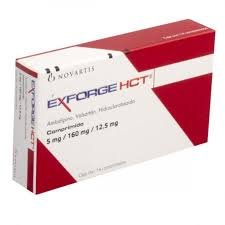
Exforge HCT Tablets 10/160 mg are a prescription-only, fixed-dose triple combination antihypertensive medicine manufactured by Novartis. Each pack contains 28 film-coated tablets providing a four-week supply at standard once-daily dosing. The formulation combines three pharmacologically distinct and complementary antihypertensive agents — amlodipine (a dihydropyridine calcium channel blocker), valsartan (an angiotensin II receptor blocker), and hydrochlorothiazide (a thiazide diuretic) — in a single tablet.
Exforge HCT represents the highest level of fixed-dose combination antihypertensive therapy, reserved for patients with hypertension that remains inadequately controlled on dual antihypertensive therapy. By simultaneously targeting three distinct pathophysiological mechanisms driving elevated blood pressure, Exforge HCT achieves superior and more sustained blood pressure reduction compared to any two-drug combination. If you have been prescribed Exforge HCT for resistant hypertension treatment in Kenya, this medicine must be taken strictly as directed by your healthcare provider alongside appropriate lifestyle modifications. The price of Exforge HCT in Kenya varies by pharmacy and is dispensed only on presentation of a valid prescription.
Key Benefits
- Triple-action antihypertensive — three complementary mechanisms in a single once-daily tablet deliver superior blood pressure control in patients unresponsive to dual therapy
- Targets all major hypertensive pathophysiological pathways simultaneously — vascular resistance, cardiac output, fluid volume, and the renin-angiotensin-aldosterone system (RAAS)
- Fixed-dose triple combination — significantly reduces pill burden from three separate medicines to a single tablet, improving long-term adherence
- Amlodipine provides 24-hour smooth blood pressure control with minimal reflex tachycardia
- Valsartan provides RAAS blockade with renal and cardiovascular protective benefits
- Hydrochlorothiazide reduces blood volume, complementing the vasodilatory effects of amlodipine and valsartan
- Once-daily dosing ensures consistent 24-hour antihypertensive coverage
- Well-established efficacy in clinical trials — including the ACCOMPLISH, VALUE, and COMPETENCE trial programmes supporting the individual components
- Suitable for patients with hypertension and concurrent conditions including diabetes, chronic kidney disease, and cardiovascular disease under specialist guidance
What It Is & How It Works
Active Ingredients
Each film-coated tablet contains:
| Active Ingredient | Strength | Role |
|---|---|---|
| Amlodipine Besylate | Equivalent to Amlodipine 10 mg | Dihydropyridine calcium channel blocker — relaxes arterial smooth muscle and reduces peripheral vascular resistance |
| Valsartan | 160 mg | Angiotensin II receptor blocker (ARB) — blocks the RAAS to lower blood pressure and protect the kidneys and heart |
| Hydrochlorothiazide | 25 mg | Thiazide diuretic — reduces blood volume through renal sodium and water excretion |
How Each Ingredient Works
Amlodipine — Dihydropyridine Calcium Channel Blocker
Amlodipine selectively blocks voltage-gated L-type calcium channels in vascular smooth muscle cells and cardiac myocytes. By preventing calcium influx into arterial smooth muscle cells, amlodipine:
- Causes direct relaxation and dilation of peripheral arterioles, significantly reducing systemic vascular resistance and arterial blood pressure
- Dilates coronary arteries, improving myocardial oxygen supply — clinically beneficial in patients with concurrent angina
- Produces a smooth, sustained antihypertensive effect over 24 hours due to its exceptionally long half-life (approximately 35–50 hours), minimising blood pressure fluctuations between doses
- Has minimal negative inotropic effect at therapeutic doses — does not significantly reduce cardiac contractility or output
Valsartan — Angiotensin II Receptor Blocker (ARB)
Valsartan is a highly selective, competitive antagonist of the angiotensin II type 1 (AT1) receptor — the primary receptor mediating the vasoconstrictive and aldosterone-stimulating actions of angiotensin II. By blocking AT1 receptors, valsartan:
- Prevents angiotensin II-mediated vasoconstriction, directly reducing peripheral vascular resistance and blood pressure
- Inhibits angiotensin II-stimulated aldosterone release from the adrenal cortex, reducing sodium and water retention and contributing to blood volume reduction
- Reduces angiotensin II-driven cardiac and vascular remodelling — providing long-term organ protection in hypertensive patients
- Reduces intraglomerular pressure in the kidneys — providing nephroprotective benefits particularly valuable in hypertensive patients with diabetes or chronic kidney disease
- Unlike ACE inhibitors, valsartan does not inhibit bradykinin degradation and therefore does not cause the persistent dry cough associated with ACE inhibitors such as enalapril — an important tolerability advantage
Hydrochlorothiazide — Thiazide Diuretic
Hydrochlorothiazide inhibits the sodium-chloride cotransporter (NCC) in the distal convoluted tubule of the kidney, reducing sodium and water reabsorption and increasing urinary excretion. This produces:
- Reduction in plasma volume and cardiac preload, lowering blood pressure through a volume-dependent mechanism
- Compensatory activation of the RAAS and sympathetic nervous system — effects that are directly and effectively counteracted by valsartan’s RAAS blockade and amlodipine’s vasodilation, making the three-way combination synergistically superior to any two-drug combination
- Chronic direct vascular smooth muscle relaxation — contributing to sustained antihypertensive efficacy beyond the initial volume reduction effect
The Triple Synergy
The three agents in Exforge HCT target hypertension through three entirely distinct and non-overlapping mechanisms:
- Amlodipine reduces vascular resistance through direct calcium channel blockade
- Valsartan blocks the RAAS — the principal hormonal system driving vasoconstriction and sodium retention
- Hydrochlorothiazide reduces intravascular volume through renal diuresis
Each mechanism triggers compensatory responses that are blocked by one or both of the other agents, creating a mutually reinforcing therapeutic cycle that produces blood pressure reduction substantially greater than the sum of the individual contributions.
Classification
Exforge HCT is classified as a Prescription Only Medicine (POM) in Kenya. It must only be initiated, monitored, and adjusted by a licensed healthcare provider — typically a specialist physician or experienced clinician given the complexity of triple antihypertensive therapy. A valid prescription is required for dispensing at any registered pharmacy in Kenya.
Formulation
Film-coated tablets. Each pack contains 28 tablets. Tablets should be swallowed whole with water, with or without food, at the same time each day.
Uses & Indications
Exforge HCT 10/160 mg Tablets are indicated for:
- Resistant or inadequately controlled essential hypertension — in adult patients whose blood pressure is not adequately controlled on a dual antihypertensive combination at the doses contained in this product
- Step-up fixed-dose combination therapy — as a simplification strategy in patients already stabilised on the three individual components (amlodipine, valsartan, and hydrochlorothiazide) at the doses contained in the combination tablet
- Hypertension with cardiovascular risk factors — including patients with diabetes mellitus, chronic kidney disease, or established cardiovascular disease requiring robust blood pressure control under specialist guidance
IMPORTANT: Exforge HCT 10/160 mg is a high-strength triple combination product containing amlodipine 10 mg, valsartan 160 mg, and hydrochlorothiazide 25 mg — all at the upper end of their respective standard dosing ranges. It is NOT indicated as initial or early-stage antihypertensive therapy. It is intended only for patients with documented inadequate blood pressure control on dual antihypertensive therapy. Initiation, titration, and ongoing monitoring must be performed exclusively by a licensed and experienced healthcare provider. Do not self-prescribe or adjust doses without medical supervision.
Dosage & Administration
This medicine requires a valid prescription. Use only as prescribed by your healthcare provider. The following dosage information is provided for general reference only and does not constitute prescribing advice.
| Patient Group | Dose | Frequency |
|---|---|---|
| Adults with inadequately controlled hypertension | As directed by physician | As directed by physician |
| Elderly patients (65+ years) | As directed by physician | As directed by physician |
| Mild to moderate renal impairment (eGFR 30–60 mL/min) | As directed by physician | As directed by physician |
| Severe renal impairment (eGFR below 30 mL/min) | As directed by physician | Not recommended |
| Mild to moderate hepatic impairment | As directed by physician | As directed by physician |
| Severe hepatic impairment | As directed by physician | Not recommended |
| Paediatric patients (under 18 years) | Not recommended — safety and efficacy not established | Not applicable |
Administration Instructions
- Take this medicine exactly as prescribed — do not increase, decrease, or skip doses without medical advice
- Take once daily at the same time each day — morning dosing is preferred to align the diuretic effect with waking hours and avoid nocturnal urination
- May be taken with or without food
- Swallow tablets whole with a full glass of water — do not crush, chew, or split
- Do not stop taking this medicine suddenly without consulting your doctor — abrupt discontinuation may result in a dangerous rebound increase in blood pressure
- If a dose is missed, take it as soon as you remember on the same day — if the next day has begun, skip the missed dose and continue as normal; do not double dose
- Maintain adequate hydration — particularly in hot weather or during physical activity — to reduce the risk of excessive blood pressure lowering and dehydration from the diuretic component
- Attend all scheduled follow-up appointments for blood pressure monitoring, renal function, and electrolyte checks — serum potassium, sodium, and creatinine monitoring is essential
Possible Side Effects
Like all medicines, Exforge HCT may cause side effects in some patients. Report any new or worsening symptoms to your healthcare provider promptly.
Common
- Dizziness or light-headedness — particularly upon standing; rise slowly from sitting or lying positions; orthostatic hypotension is a significant risk with triple antihypertensive therapy
- Peripheral oedema (ankle swelling) — related to the amlodipine component; usually mild; report if worsening
- Headache
- Fatigue or weakness
- Increased urinary frequency — expected pharmacological effect of hydrochlorothiazide; most pronounced in the first few days of treatment
- Hypokalaemia (low blood potassium) — caused by hydrochlorothiazide; symptoms include muscle cramps, weakness, and palpitations; regular potassium monitoring is essential
Less Common
- Hypotension (low blood pressure) — particularly in volume-depleted patients, those on concurrent diuretics, or following dose increases; may cause dizziness, fainting, or falls
- Hyponatraemia (low blood sodium) — particularly in elderly patients; symptoms include confusion, headache, and weakness
- Flushing or facial redness — related to amlodipine’s vasodilatory effect
- Palpitations or tachycardia — mild reflex tachycardia from amlodipine
- Hyperuricaemia (raised uric acid) — hydrochlorothiazide may precipitate gout in susceptible patients
- Hyperglycaemia — thiazide diuretics may impair glucose tolerance; monitor blood sugar in diabetic patients
- Elevated creatinine or blood urea nitrogen — ARBs reduce intraglomerular pressure; a modest rise in serum creatinine on initiation is expected and usually acceptable; significant rises warrant medical review
- Hyperkalaemia — less common than with ACE inhibitors but valsartan may raise potassium, partially offsetting hydrochlorothiazide-induced hypokalaemia; monitor electrolytes carefully
WARNING: Rare but serious — seek immediate medical attention if you experience: severe hypotension causing loss of consciousness or inability to stand (particularly after first dose or following dehydration, illness, or vomiting), acute kidney injury (significant reduction in urine output, rapidly rising creatinine), severe electrolyte disturbances (muscle paralysis, cardiac arrhythmias, severe confusion), angioedema (sudden swelling of the face, lips, tongue, or throat — a rare but potentially life-threatening reaction; ARB-induced angioedema is less common than with ACE inhibitors but has been reported), acute angle-closure glaucoma (sudden severe eye pain, blurred vision — rare reaction to hydrochlorothiazide), or severe skin reactions including Stevens-Johnson Syndrome.
This is not a complete list of side effects. Report all side effects to your healthcare provider.
Warnings & Precautions
CONTRAINDICATION: Do NOT use Exforge HCT if you have severe renal impairment (eGFR below 30 mL/min), anuria, severe hepatic impairment, refractory hypokalaemia, hyponatraemia, hypercalcaemia, symptomatic hyperuricaemia or gout, known hypersensitivity to amlodipine, valsartan, hydrochlorothiazide, sulphonamide derivatives, or any excipient in this formulation, or if you are pregnant.
Do Not Use If You:
- Are pregnant — valsartan (an ARB) causes fetal harm including renal dysplasia, oligohydramnios, limb contractures, and fetal death; ARBs and ACE inhibitors are absolutely contraindicated in pregnancy
- Are breastfeeding — valsartan passes into breast milk; consult a doctor before use
- Have severe renal impairment or anuria — hydrochlorothiazide is both ineffective and potentially harmful
- Have severe hepatic impairment — valsartan and amlodipine metabolism is significantly impaired
- Have hypersensitivity to sulphonamide-derived medicines — hydrochlorothiazide is a sulphonamide derivative; cross-reactivity is possible
- Are taking aliskiren-containing medicines and have diabetes or kidney impairment — combined RAAS blockade is contraindicated
Use With Caution If You Have:
- Bilateral renal artery stenosis or stenosis of the artery to a single functioning kidney — ARBs and ACE inhibitors can precipitate acute kidney injury in this setting
- Significant aortic or mitral valve stenosis, or hypertrophic obstructive cardiomyopathy — risk of severe hypotension
- Diabetes mellitus — hydrochlorothiazide may impair glucose tolerance; valsartan may alter insulin sensitivity; monitor blood glucose carefully
- Gout or hyperuricaemia — hydrochlorothiazide raises uric acid levels; monitor uric acid
- Systemic lupus erythematosus — hydrochlorothiazide may trigger or worsen SLE
- Severe volume depletion or sodium depletion — risk of profound first-dose hypotension; correct dehydration before initiating therapy
- Elderly patients — significantly increased risk of orthostatic hypotension, falls, electrolyte disturbances, and renal impairment
- Primary hyperaldosteronism — valsartan and other RAAS blockers may be less effective in this setting
Do Not Combine With (Selected Key Interactions — Consult Pharmacist for Full Review):
- Other RAAS blockers (ACE inhibitors, aliskiren) — dual or triple RAAS blockade significantly increases the risk of hypotension, hyperkalaemia, and acute renal failure; avoid combination
- Potassium-sparing diuretics (spironolactone, amiloride) or potassium supplements — risk of dangerous hyperkalaemia with valsartan; monitor potassium closely
- Lithium — hydrochlorothiazide reduces renal lithium excretion, increasing lithium toxicity risk; avoid or monitor lithium levels extremely closely
- NSAIDs (ibuprofen, diclofenac, aspirin) — reduce the antihypertensive effect of all three components and significantly increase the risk of acute kidney injury; the triple combination of an ARB, diuretic, and NSAID (the so-called “triple whammy”) carries a particularly high risk of acute renal failure and should be avoided
- CYP3A4 inhibitors (ketoconazole, itraconazole, ritonavir, clarithromycin) — may increase amlodipine plasma levels, enhancing its hypotensive and vasodilatory side effects; monitor blood pressure and for amlodipine-related side effects
- CYP3A4 inducers (rifampicin, carbamazepine, phenytoin, St John’s Wort) — may reduce amlodipine plasma levels, potentially reducing antihypertensive efficacy
- Antidiabetic agents — hydrochlorothiazide may raise blood glucose; valsartan may alter glucose metabolism; monitor carefully and adjust antidiabetic therapy as needed
- Cholestyramine and colestipol resins — reduce hydrochlorothiazide absorption; administer Exforge HCT at least 1 hour before or 4 hours after these agents
- Other antihypertensive agents — additive hypotensive effects; monitor blood pressure closely and adjust doses accordingly
- Alcohol — enhances the hypotensive effect of all three components; advise patients to limit alcohol consumption
CLINICAL NOTE (Kenya-specific): Resistant hypertension — defined as blood pressure that remains above target despite treatment with three antihypertensive agents of different classes at optimal doses, ideally including a diuretic — is an increasingly recognised clinical challenge in Kenya, where hypertension prevalence is estimated at 24–30% of adults and is rising sharply with urbanisation, dietary change, and increasing rates of obesity, diabetes, and chronic kidney disease. Exforge HCT addresses this clinical need with a rigorously validated triple-combination approach. Several Kenya-specific considerations are paramount in the safe use of this product. The NSAIDs “triple whammy” interaction is a critical safety concern in Kenya, where ibuprofen and diclofenac are widely and often unsupervised used for pain management — clinicians and pharmacists must explicitly counsel patients on the absolute need to avoid concurrent NSAID use with Exforge HCT. Electrolyte monitoring — particularly serum potassium and sodium — is essential but access to laboratory testing may be limited in some parts of Kenya; clinicians should establish a practical monitoring schedule based on available resources. Additionally, adequate hydration in Kenya’s hot climate — particularly in physically active patients in agricultural and construction occupations — is an important daily safety message to prevent excessive blood pressure lowering, dehydration, and acute kidney injury from the diuretic component of this medicine.
Keep out of reach of children. Store all medicines safely and securely.
Storage Instructions
- Store below 30°C in a cool, dry place
- Protect from direct sunlight, moisture, and excessive heat
- Keep tablets in their original blister packaging
- Store out of reach and sight of children
- Do not use after the expiry date printed on the packaging
- Do not transfer tablets to another container
- Dispose of unused or expired tablets safely at your local registered pharmacy — do not flush down the toilet or discard in household waste
Mandatory Disclaimer
This medicine requires a valid prescription. Do not use without medical advice. Exforge HCT (Amlodipine + Valsartan + Hydrochlorothiazide) is a Prescription Only Medicine (POM) representing a high-strength triple antihypertensive combination that must be initiated, monitored, and adjusted exclusively by a licensed and experienced healthcare provider. Do not self-prescribe, purchase without a valid prescription, or share this medicine with others. Abrupt discontinuation without medical guidance may result in dangerous rebound hypertension. Regular medical follow-up — including blood pressure monitoring, renal function tests, and serum electrolyte checks at a minimum every 3–6 months — is a non-negotiable component of safe Exforge HCT therapy. Avoid concurrent NSAID use. This product information is provided for general educational reference only and does not constitute medical advice or replace the guidance of a qualified healthcare professional.
References
- Kenya Essential Medicines List (KEML) & Kenya Clinical Guidelines — Cardiovascular Disease: Resistant Hypertension and Combination Antihypertensive Therapy
- European Society of Hypertension (ESH) & European Society of Cardiology (ESC) — Guidelines for the Management of Arterial Hypertension: Triple Combination Therapy and Resistant Hypertension Evidence Review
Reviews
There are no reviews yet.