
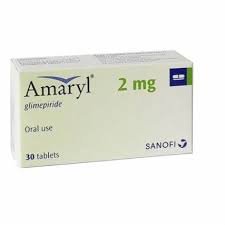
PRESCRIPTION NOTICE: Amaryl 4 mg is a Prescription Only Medicine (POM). It cannot legally be dispensed without a valid prescription from a licensed healthcare provider in Kenya. Do not use this medicine without medical supervision. Do not share this medicine with others even if they appear to have the same condition.
Amaryl Tablets 2 mg are a prescription-only oral antidiabetic medicine containing glimepiride as the active ingredient. Each pack contains 30 film-coated tablets, providing a one-month supply at standard once-daily dosing. Amaryl is manufactured by Sanofi and belongs to the third-generation sulphonylurea class of antidiabetic agents — one of the most widely prescribed categories of medicines for the management of type 2 diabetes mellitus worldwide.
Glimepiride stimulates the pancreas to produce more insulin and improves the body’s ability to use insulin effectively, helping to lower and maintain blood glucose levels within the target range. Amaryl 4 mg represents the higher end of the standard dosing range and is typically prescribed to patients whose blood sugar is not adequately controlled on lower doses of glimepiride or other oral antidiabetic agents. If you have been prescribed Amaryl for type 2 diabetes treatment in Kenya, this medicine must be taken strictly as directed by your healthcare provider alongside appropriate dietary and lifestyle modifications. The price of Amaryl 4 mg in Kenya varies by pharmacy and is dispensed only on presentation of a valid prescription.
Key Benefits
- Effective once-daily oral blood glucose lowering in patients with type 2 diabetes mellitus
- Third-generation sulphonylurea — improved selectivity for pancreatic beta-cell receptors compared to older sulphonylureas, with a more favourable cardiovascular safety profile
- Lower risk of hypoglycaemia compared to older sulphonylureas such as glibenclamide — due to glucose-dependent insulin release mechanism
- Improves both fasting and postprandial (after-meal) blood glucose levels
- Once-daily dosing supports long-term treatment adherence
- Can be used as monotherapy or in combination with metformin, insulin, or other antidiabetic agents as directed by a physician
- Well-established safety and efficacy profile with extensive global clinical use
- Included in the Kenya Essential Medicines List (KEML) and Kenya Clinical Guidelines for type 2 diabetes management
What It Is & How It Works
Active Ingredient
Each film-coated tablet contains:
| Active Ingredient | Strength | Role |
|---|---|---|
| Glimepiride | 2 mg | Third-generation sulphonylurea — stimulates pancreatic insulin secretion and improves peripheral insulin sensitivity |
How It Works
Glimepiride exerts its blood glucose-lowering effect through two complementary mechanisms:
Pancreatic (Primary) Mechanism
Glimepiride binds selectively to the sulphonylurea receptor 1 (SUR1) subunit of the ATP-sensitive potassium (KATP) channels on pancreatic beta cells. This binding closes the KATP channels, leading to membrane depolarisation, calcium influx through voltage-gated calcium channels, and the subsequent exocytosis (release) of insulin-containing secretory granules from the beta cell into the bloodstream. The net result is increased circulating insulin levels, which drives glucose uptake into peripheral tissues and suppresses hepatic glucose output — lowering blood glucose.
Extrapancreatic (Secondary) Mechanism
Glimepiride also exerts insulin-sensitising effects in peripheral tissues — particularly skeletal muscle and adipose tissue — by increasing the number and activity of glucose transporter proteins (GLUT4), enhancing glucose uptake independent of additional insulin secretion. This dual mechanism contributes to more comprehensive glycaemic control.
Glucose Dependency
Unlike older sulphonylureas, glimepiride demonstrates a degree of glucose dependency in its insulin-releasing action — it stimulates insulin secretion more prominently at higher blood glucose concentrations, which partially mitigates the risk of severe hypoglycaemia at standard doses.
Classification
Amaryl 4 mg is classified as a Prescription Only Medicine (POM) in Kenya. It must only be initiated, monitored, and adjusted by a licensed healthcare provider. A valid prescription is required for dispensing at any registered pharmacy in Kenya.
Formulation
Film-coated tablets. Each pack contains 30 tablets. Tablets should be swallowed whole with water, immediately before or during the first main meal of the day.
Uses & Indications
Amaryl 4 mg Tablets are indicated for:
- Type 2 diabetes mellitus in adults — when diet, exercise, and lifestyle modification alone are insufficient to achieve adequate glycaemic control
- As monotherapy — in patients not adequately controlled on diet and lifestyle alone and for whom metformin is contraindicated or not tolerated
- In combination with metformin — for patients not adequately controlled on metformin alone
- In combination with insulin — for patients not adequately controlled on oral antidiabetic agents alone, under specialist supervision
- In combination with other antidiabetic agents — as directed by a physician, in accordance with individual patient clinical profile and treatment goals
IMPORTANT: Amaryl is indicated exclusively for type 2 diabetes mellitus. It is NOT indicated for type 1 diabetes mellitus, diabetic ketoacidosis, or hyperosmolar hyperglycaemic state — these conditions require insulin therapy and urgent medical management. The decision to initiate, adjust, or discontinue Amaryl therapy must be made by a licensed healthcare provider based on regular monitoring of blood glucose and HbA1c levels.
Dosage & Administration
This medicine requires a valid prescription. Use only as prescribed by your healthcare provider. The following dosage information is provided for general reference only and does not constitute prescribing advice.
| Treatment Stage | Dose | Timing |
|---|---|---|
| Starting dose | As directed by physician | As directed by physician |
| Dose titration | As directed by physician | As directed by physician |
| Usual maintenance dose | As directed by physician | As directed by physician |
| Maximum daily dose | As directed by physician | As directed by physician |
| Combination with insulin | As directed by physician | As directed by physician |
| Renal or hepatic impairment | As directed by physician | As directed by physician |
Administration Instructions
- Take this medicine exactly as prescribed — do not increase, decrease, or skip doses without medical advice
- Take immediately before or during the first main meal of the day — do not take on an empty stomach as this significantly increases the risk of hypoglycaemia
- Swallow tablets whole with a full glass of water — do not crush or chew
- Take at the same time each day to maintain consistent blood glucose control
- Never skip a meal after taking Amaryl — skipping meals significantly increases the risk of low blood sugar (hypoglycaemia)
- If a dose is missed, do not double the next dose — take the next scheduled dose as normal and monitor blood glucose closely
- Do not stop taking this medicine suddenly without consulting your doctor — abrupt discontinuation may cause loss of glycaemic control
- Maintain consistent dietary habits — irregular eating patterns increase the risk of hypoglycaemia
- Monitor blood glucose regularly as directed by your healthcare provider
- Attend all scheduled follow-up appointments for HbA1c monitoring and clinical review
Possible Side Effects
Like all medicines, Amaryl 4 mg may cause side effects in some patients. Report any new or worsening symptoms to your healthcare provider promptly.
Common
- Hypoglycaemia (low blood sugar) — the most clinically significant and common side effect of all sulphonylureas; symptoms include shakiness, sweating, dizziness, palpitations, confusion, hunger, and in severe cases, loss of consciousness or seizures; risk is increased by missed meals, excessive physical activity, alcohol consumption, or drug interactions
- Nausea, vomiting, or gastrointestinal discomfort — particularly at the start of treatment; usually improves with continued use
- Headache
- Dizziness
Less Common
- Weight gain — sulphonylureas promote insulin secretion which can lead to increased fat storage; dietary management is important
- Skin reactions — rash, itching, or urticaria; usually mild
- Elevated liver enzymes — usually transient and asymptomatic
- Visual disturbances — transient blurred vision may occur at the start of treatment due to changes in blood glucose levels affecting lens hydration
WARNING: Rare but serious — seek immediate medical attention if you experience: severe hypoglycaemia (loss of consciousness, seizures, or inability to self-treat — administer glucose immediately and call emergency services), severe allergic reactions (anaphylaxis, rash, swelling of the face, lips, tongue, or throat, difficulty breathing), severe skin reactions including Stevens-Johnson Syndrome or Toxic Epidermal Necrolysis, signs of serious liver damage (jaundice, dark urine, severe abdominal pain), or signs of serious blood disorders — agranulocytosis, aplastic anaemia, or thrombocytopenia (unusual bruising or bleeding, persistent infection, severe fatigue).
This is not a complete list of side effects. Report all side effects to your healthcare provider.
Warnings & Precautions
CONTRAINDICATION: Do NOT use Amaryl if you have type 1 diabetes mellitus, diabetic ketoacidosis, severe liver disease, severe kidney disease, known hypersensitivity to glimepiride, other sulphonylureas, sulphonamides, or any excipient in this formulation, or if you are pregnant or breastfeeding.
Do Not Use If You:
- Have type 1 diabetes mellitus or diabetic ketoacidosis — insulin is required
- Have severe hepatic impairment — risk of accumulation and severe hypoglycaemia
- Have severe renal impairment (eGFR below 30 mL/min/1.73 m²) — increased risk of hypoglycaemia due to reduced glimepiride clearance
- Are pregnant — sulphonylureas may cause neonatal hypoglycaemia; insulin is the preferred treatment for diabetes in pregnancy
- Are breastfeeding — glimepiride passes into breast milk and may cause hypoglycaemia in the nursing infant
- Have known hypersensitivity to sulphonylureas or sulphonamides — cross-reactivity is possible
Use With Caution If You Have:
- Mild to moderate renal impairment — monitor renal function and blood glucose closely; dose adjustment may be required
- Mild to moderate hepatic impairment — monitor liver function and blood glucose closely
- G6PD deficiency — sulphonylureas may cause haemolytic anaemia in G6PD-deficient individuals, which has notable prevalence in some Kenyan populations; consult your doctor
- Adrenal or pituitary insufficiency — increased sensitivity to glucose-lowering agents
- Elderly patients — increased risk of hypoglycaemia; use the lowest effective dose and monitor closely
- Patients under physiological stress — surgery, fever, trauma, or intercurrent illness may alter insulin requirements and glycaemic response; more frequent blood glucose monitoring is required
Do Not Combine With (Selected Key Interactions — Consult Pharmacist for Full Review):
- Insulin and other antidiabetic agents — additive glucose-lowering effect; dose adjustment and close monitoring required
- Fluconazole and other azole antifungals — inhibit CYP2C9, significantly increasing glimepiride plasma levels and hypoglycaemia risk
- NSAIDs (particularly aspirin at high doses) — may enhance the hypoglycaemic effect of sulphonylureas
- Beta-blockers (including Concor/bisoprolol) — may mask the symptoms of hypoglycaemia (particularly tachycardia and tremor); sweating may still be present as a warning sign
- Rifampicin — induces CYP2C9, significantly reducing glimepiride plasma levels and potentially causing loss of glycaemic control
- ACE inhibitors (including Enalapril) — may enhance the insulin-sensitising effect, increasing hypoglycaemia risk; monitor blood glucose closely
- Alcohol — unpredictable effect on blood glucose; may potentiate hypoglycaemia and mask its symptoms; advise patients to limit or avoid alcohol
- Corticosteroids — antagonise the glucose-lowering effect of glimepiride; blood glucose may rise significantly during steroid therapy
- Thiazide diuretics — may reduce the efficacy of glimepiride by causing hyperglycaemia
- Coumarin anticoagulants (warfarin) — glimepiride may potentiate or reduce anticoagulant effect; monitor INR closely
CLINICAL NOTE (Kenya-specific): Type 2 diabetes mellitus is a rapidly growing public health challenge in Kenya, with prevalence estimates exceeding 3.3 million adults and rising, driven by urbanisation, dietary changes, physical inactivity, and increasing rates of obesity. Glimepiride (Amaryl) is included on the Kenya Essential Medicines List (KEML) and features in the Kenya Clinical Guidelines for the management of type 2 diabetes. Clinicians and patients in Kenya should be particularly vigilant regarding the following context-specific considerations: G6PD deficiency — which carries elevated prevalence in certain Kenyan ethnic groups — may increase the risk of sulphonylurea-induced haemolytic anaemia; patients should be screened where possible. Hypoglycaemia risk is substantially elevated in patients who engage in prolonged physical labour — common in agricultural communities across Kenya — and in those with irregular or inadequate food intake; patient education on recognising and managing hypoglycaemia is a critical component of safe Amaryl therapy. Regular HbA1c monitoring every 3 months, fasting blood glucose self-monitoring, and annual renal and hepatic function testing are essential for all patients on long-term sulphonylurea therapy in Kenya.
Keep out of reach of children. Store all medicines safely and securely.
Storage Instructions
- Store below 25°C in a cool, dry place
- Protect from direct sunlight, moisture, and excessive heat
- Keep tablets in their original blister packaging
- Store out of reach and sight of children
- Do not use after the expiry date printed on the packaging
- Do not transfer tablets to another container
- Dispose of unused or expired tablets safely at your local registered pharmacy — do not flush down the toilet or discard in household waste
Mandatory Disclaimer
This medicine requires a valid prescription. Do not use without medical advice. Amaryl 2 mg (Glimepiride) is a Prescription Only Medicine (POM) that must be initiated, monitored, and adjusted exclusively by a licensed healthcare provider. Do not self-prescribe, purchase without a valid prescription, or share this medicine with others. Regular blood glucose monitoring, HbA1c testing, and clinical follow-up are non-negotiable components of safe and effective Amaryl therapy. Patients and caregivers must be fully educated on the recognition and emergency management of hypoglycaemia before starting treatment. Amaryl is not a substitute for appropriate diet, regular physical activity, and healthy lifestyle modifications — these remain the foundation of type 2 diabetes management. This product information is provided for general educational reference only and does not constitute medical advice or replace the guidance of a qualified healthcare professional.
Reviews
There are no reviews yet.