
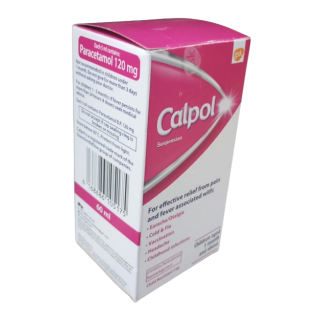
Calpol Paediatric Suspension 60 mL is one of the most trusted and widely recognised over-the-counter (OTC) paediatric medicines globally, containing paracetamol as the active ingredient in a pleasant strawberry-flavoured oral suspension. Formulated specifically for babies from 2 months of age and young children, Calpol provides safe, effective, and gentle relief from fever and mild to moderate pain associated with common childhood illnesses, teething, immunisations, and minor injuries.
Each 5 mL of Calpol Paediatric Suspension contains paracetamol 120 mg — a carefully calibrated concentration designed for accurate weight-based and age-based dosing in the youngest and most vulnerable paediatric patients. The suspension format ensures precise dose measurement and easy administration, while the strawberry flavour significantly improves palatability and child compliance. If you are looking to buy Calpol Suspension in Kenya, this product is widely available at registered pharmacies nationwide and is one of the most recommended fever and pain relief medicines for babies and young children in Kenya. The price of Calpol Suspension in Kenya is accessible, making it a practical and trusted choice for paediatric fever and pain management in Kenyan households.
Key Benefits
- Trusted globally and in Kenya as a first-line paediatric fever and pain relief medicine for over 60 years
- Suitable from 2 months of age — covering the youngest paediatric age group, including post-immunisation fever management
- Paracetamol 120 mg per 5 mL — concentration specifically calibrated for accurate dosing in babies and young children
- Pleasant strawberry flavour — significantly improves palatability and reduces administration stress for parents and children
- Sugar-free formulation — gentle on developing baby teeth and appropriate for children with dietary sugar restrictions
- Alcohol-free — safe and appropriate for the youngest patients
- Fast-acting — fever reduction and pain relief typically begin within 30–60 minutes of administration
- Gentle and well tolerated — paracetamol has an excellent safety profile in children when used at recommended doses
- OTC — no prescription required for standard paediatric use
- Convenient 60 mL bottle — provides a practical supply for managing acute illness episodes
What It Is & How It Works
Active Ingredient
Each 5 mL of suspension contains:
| Active Ingredient | Strength per 5 mL | Role |
|---|---|---|
| Paracetamol (Acetaminophen) | 120 mg | Analgesic and antipyretic — relieves pain and reduces fever |
How It Works
Antipyretic Mechanism (Fever Reduction)
Paracetamol reduces fever by acting on the hypothalamus — the body’s thermoregulatory centre in the brain. During illness or infection, pyrogens (fever-inducing substances including prostaglandin E2) raise the hypothalamic temperature set point, causing the body to generate and retain heat and producing fever. Paracetamol inhibits the cyclooxygenase (COX) enzymes responsible for prostaglandin synthesis in the central nervous system — particularly within the hypothalamus — lowering the elevated temperature set point and allowing the body to dissipate heat through normal mechanisms such as sweating and vasodilation, thereby reducing body temperature towards normal.
Analgesic Mechanism (Pain Relief)
Paracetamol’s analgesic mechanism involves inhibition of central COX enzyme activity, reducing the central sensitisation to pain signals. It also modulates the endocannabinoid system through its active metabolite AM404, contributing to its pain-relieving effect. Unlike NSAIDs such as ibuprofen, paracetamol does not significantly inhibit peripheral COX enzymes and therefore does not reduce peripheral inflammation — however, it provides effective central pain relief for mild to moderate pain including teething discomfort, headache, sore throat, and post-immunisation pain.
Why Paracetamol Is the Preferred First-Line Analgesic-Antipyretic in Young Children
Paracetamol is universally recommended as the first-line analgesic and antipyretic for infants and young children due to its:
- Excellent safety profile at recommended doses across all paediatric age groups including young infants
- Absence of the gastric irritation, platelet effects, and renal risks associated with NSAIDs
- No association with Reye’s Syndrome — unlike aspirin, paracetamol is completely safe for use in children with viral infections
- Predictable, well-characterised pharmacokinetics in the paediatric population
- Lack of significant sedation or CNS depression at therapeutic doses
Classification
This product is classified as an Over-the-Counter (OTC) medicine in Kenya. It can be purchased without a prescription for standard paediatric use in children aged 2 months and above. Consult a pharmacist or doctor if you are unsure about the suitability of this product for your child or regarding dosing in premature or low birth weight infants.
Formulation
Oral suspension. Each bottle contains 60 mL. Each 5 mL of suspension contains paracetamol 120 mg. Shake well before each use. Measure doses using the calibrated oral syringe or dosing spoon provided — do not use a household teaspoon.
Uses & Indications
Calpol Paediatric Suspension may be used for the symptomatic relief of:
- Fever (pyrexia) — including fever associated with common colds, flu, ear infections, tonsillitis, and other childhood illnesses
- Post-immunisation fever — a common and distressing reaction following childhood vaccinations; Calpol is widely recommended by healthcare providers for post-vaccination fever management
- Teething pain — the discomfort and mild fever that can accompany tooth eruption in babies and young children
- Mild to moderate pain — including headache, sore throat, earache, and minor musculoskeletal aches
- Pain and fever following minor injuries or procedures
- Post-operative pain relief in children — under medical guidance
IMPORTANT: Calpol Paediatric Suspension is indicated for babies aged 2 months and above. It is NOT recommended for premature babies or babies under 2 months of age without specific medical advice. For post-immunisation fever in babies aged 2–3 months, a reduced dose is recommended — always follow the specific dosing guidance on the label or consult your healthcare provider. Fever in babies under 3 months of age — regardless of the cause — should be assessed by a doctor promptly.
Dosage & Administration
NOTE: Use only as directed on the label or by a pharmacist. Do not exceed the recommended dose or duration of use. Dose is based on the child’s weight where possible — always use weight-based dosing for accuracy in young infants.
| Age Group | Weight | Dose | Frequency | Maximum Daily Dose |
|---|---|---|---|---|
| 2–3 months (post-immunisation only) | As directed | As directed | As directed | As directed |
| 2–3 months (other indications) | As directed | Consult a doctor | — | — |
| 3–6 months | As directed | As directed | As directed | As directed |
| 6–24 months | As directed | As directed | As directed | As directed |
| 2–4 years | As directed | As directed | As directed | As directed |
| 4–6 years | As directed | As directed | As directed | As directed |
| Children under 2 months | Not recommended without medical advice | — | — | — |
Administration Instructions
- Shake the bottle well before each use to ensure uniform suspension and accurate drug concentration in each dose
- Measure the dose carefully using the calibrated oral syringe or dosing spoon provided — do not use a household teaspoon as this results in inaccurate dosing in young children and infants
- May be given directly into the child’s mouth using the oral syringe — administer slowly along the inside of the cheek to reduce the risk of choking
- May be mixed with a small amount of cool water or diluted fruit juice if the child resists taking the syrup directly
- Allow at least 4 hours between doses — do not give more than 4 doses in any 24-hour period
- Do not use for more than 3 days for fever or more than 5 days for pain without consulting a healthcare provider
- Do not use alongside other paracetamol-containing medicines — including combination cold and flu syrups, multi-symptom medicines, or other paracetamol suspensions; risk of serious paracetamol overdose
- Keep the bottle tightly closed after each use
Possible Side Effects
Calpol Paediatric Suspension is generally very well tolerated in babies and young children at recommended doses. Paracetamol has one of the best-established paediatric safety profiles of any medicine when used correctly. However, some children may rarely experience the following:
Common
- Mild nausea — uncommon at paediatric doses; usually transient
Less Common
- Skin rash or mild allergic skin reactions — uncommon; discontinue and consult a pharmacist or doctor if rash develops
- Blood disorders — very rare; thrombocytopenia (low platelet count) and neutropenia have been reported in rare cases with prolonged use
WARNING: Rare but serious — seek immediate medical attention if your child experiences: signs of serious liver damage (yellowing of the skin or eyes, abdominal pain, unusual fatigue — this is a risk in overdose situations rather than at therapeutic doses), severe allergic reactions including anaphylaxis (rash, swelling of the face, lips, or throat, difficulty breathing), or severe skin reactions including Stevens-Johnson Syndrome (widespread blistering and skin peeling — extremely rare but reported with paracetamol). Paracetamol overdose is a leading cause of acute liver failure in children — even small accidental excess doses can cause serious harm. In case of suspected overdose — even if the child appears well — seek emergency medical attention immediately without delay.
This is not a complete list of side effects. Consult a pharmacist or doctor for full information.
Warnings & Precautions
CONTRAINDICATION: Do NOT use Calpol Paediatric Suspension if your child has a known hypersensitivity to paracetamol or any excipient in this formulation.
Do Not Use If Your Child:
- Is under 2 months of age without specific medical advice
- Has a known allergy to paracetamol or any ingredient in this product
- Is already taking any other medicine containing paracetamol — this includes combination cold and flu syrups, multi-symptom medicines, and other paracetamol-containing products; duplicate dosing is a significant and preventable cause of paracetamol overdose in children
Use With Caution If Your Child Has:
- Liver disease or impaired liver function — paracetamol is metabolised by the liver; use with caution and at reduced doses under medical guidance in children with hepatic impairment
- Kidney disease — consult a doctor before use; dose interval adjustment may be required in significant renal impairment
- G6PD deficiency — paracetamol is generally considered safe in G6PD-deficient children but consult a pharmacist or doctor for confirmation
- Severe malnutrition or low body weight — may affect paracetamol metabolism and increase toxicity risk; use weight-based dosing carefully and consult a healthcare provider
- Glutathione depletion states — including severe malnutrition and prolonged fasting, which increase the risk of paracetamol hepatotoxicity
Do Not Combine With:
- Other paracetamol-containing medicines — absolute contraindication; risk of paracetamol overdose and serious liver damage
- Warfarin or anticoagulant therapy — regular paracetamol use may enhance the anticoagulant effect; monitor closely if the child is on anticoagulant therapy
- Cholestyramine — reduces paracetamol absorption; separate doses by at least 1 hour
- Metoclopramide or domperidone — increase the rate of paracetamol absorption; may enhance both therapeutic effects and side effects
CLINICAL NOTE (Kenya-specific): Fever is one of the most common presentations in paediatric pharmacy and clinic consultations in Kenya, and Calpol is a widely trusted and appropriate first-line management option for febrile children aged 2 months and above. However, Kenyan parents and caregivers must be clearly counselled on two critically important context-specific safety considerations. First, paracetamol overdose in children — a significant and preventable cause of paediatric liver failure in Kenya — often occurs unintentionally through concurrent use of multiple paracetamol-containing products, or through weight-based dosing errors. Pharmacists must confirm that no other paracetamol-containing medicine is being used simultaneously and should provide explicit dose calculation guidance based on the child’s current weight. Second, fever in a Kenyan child — particularly under 5 years of age — requires active assessment to exclude malaria, a life-threatening condition that is one of the most common causes of febrile illness and childhood mortality in Kenya. Paracetamol reduces fever and provides comfort but does not treat malaria or any other infection. Any febrile child who does not improve within 24–48 hours, has rigors, appears seriously unwell, has difficulty breathing, or shows any signs of deterioration must be urgently referred for malaria testing and medical evaluation — antipyretic treatment alone is not sufficient and must not delay appropriate diagnosis and antimalarial therapy where indicated.
Keep out of reach of children. In case of suspected overdose — even if the child appears well — seek emergency medical attention immediately. Do not wait for symptoms to develop.
Storage Instructions
- Store below 25°C in a cool, dry place
- Protect from direct sunlight and excessive heat
- Keep away from moisture and humidity
- Do not refrigerate unless specifically directed on the label — refrigeration is not required and may thicken the suspension
- Keep the bottle tightly closed after each use
- Store out of reach and sight of children — this is a children’s medicine but must be stored safely away from unsupervised access
- Do not use after the expiry date printed on the bottle or carton
- Do not transfer the suspension to another container
- Dispose of unused or expired suspension safely at your local registered pharmacy
Mandatory Disclaimer
Always read the label and use as directed. Do not exceed the stated dose for your child’s age and weight. Do not use alongside any other medicine containing paracetamol. If your child’s fever persists for more than 3 days, worsens, or is accompanied by a rash, difficulty breathing, persistent vomiting, signs of dehydration, rigors, or any signs of serious illness, stop use and seek immediate medical attention. In Kenya, fever in a child under 5 years must be assessed for malaria — paracetamol treats the symptom of fever but not the underlying cause. In case of suspected overdose, seek emergency medical care immediately without delay. This product information is provided for general guidance only and does not replace professional medical or pharmaceutical advice.


Reviews
There are no reviews yet.